ภาษา
ภาษา
บ้าน / บล็อก / ข่าวอุตสาหกรรม / What is a Horizontal Centrifugal Pump and How Does It Optimize Industrial Water Flow
ข่าว


 2026.03.23
 ข่าวอุตสาหกรรม
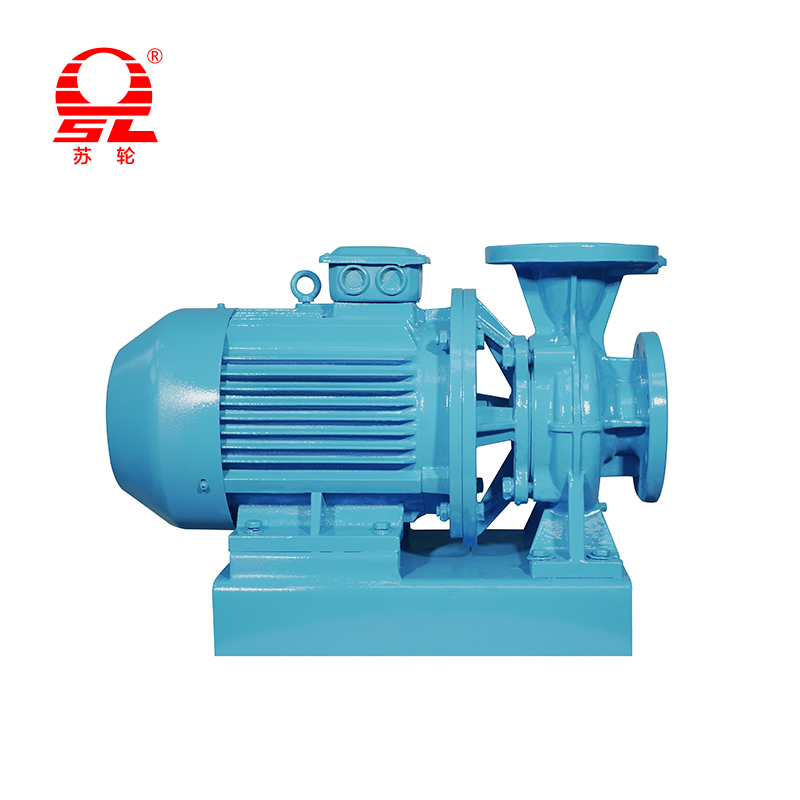
A Horizontal Centrifugal Pump is one of the most widely used mechanical devices in the field of modern fluid transport. Its core definition lies in the arrangement of the pump shaft: the shaft is positioned horizontally, parallel to the ground. This design not only determines its physical appearance but also fundamentally affects its structural stress, installation method, and ease of maintenance.
The operation of a horizontal centrifugal pump is based on the principle of centrifugal force. When the motor drives the pump shaft, the impeller mounted on the shaft rotates at high speed. Liquid enters the center of the impeller (suction port) and gains immense kinetic energy and centrifugal force driven by the impeller blades. The liquid is thrown toward the edge of the impeller and then enters the volute passage of the pump casing.
During this process, based on Bernoulli's principle, the flow velocity of the liquid decreases, and kinetic energy is converted into pressure energy. This energy conversion allows the liquid to overcome pipeline resistance and be transported to higher or further locations.
To ensure efficient operation, a high-performance Horizontal Centrifugal Pump is composed of several key components working in precision:
Horizontal Shaft: Carries the impeller and transmits motor torque. Its horizontal layout ensures even weight distribution, reducing excessive wear on bearings.
Impeller: The "heart" of the pump. Usually classified as closed, semi-open, or open. Closed impellers have the highest efficiency and are commonly used for clean water.
Volute Casing: The spiral design is intended to collect the liquid thrown from the impeller and effectively convert momentum into static pressure.
Sealing Device (Mechanical Seals/Packing): Prevents liquid from leaking out of the pump or external air from entering, which could cause cavitation.
Bearing House: Supports the rotation of the horizontal shaft and is often designed with a sight glass to monitor lubricant levels.
The horizontal centrifugal pump is an "all-rounder" in the industrial field due to its stable structure and wide flow range. Below are its core application scenarios:
In chemical plants, oil refineries, and paper mills, the Horizontal Centrifugal Pump is used to transport acids, alkalis, solvents, and various types of process water. Because the pump body is placed horizontally, engineers can easily arrange complex sensors and cooling lines around the pump head.
City water plants utilize large horizontal centrifugal pumps for long-distance pressurized water delivery. In sewage treatment plants, horizontal pumps with special impeller designs are responsible for circulating activated sludge or discharging treated reclaimed water.
In vast farmlands, horizontal pumps are usually coupled with diesel engines or electric motors to draw water from rivers or reservoirs. Their sturdy base can adapt to uneven outdoor installation environments, and maintenance does not require dismantling deeply buried pipelines.
In large commercial buildings (such as shopping malls and data centers), they are responsible for the circulation of chilled water and cooling water. The horizontal design is easy to integrate into compact basement machine rooms, and noise control is relatively simple.
While there are many types of centrifugal pumps, they can generally be summarized into four core types based on industrial standards and structural characteristics:
This is the most common type of Horizontal Centrifugal Pump. Liquid is sucked in from one side, passes through a single impeller, and is then discharged. It is simple in structure, affordable, and suitable for most clean water transport tasks with small to medium flow rates.
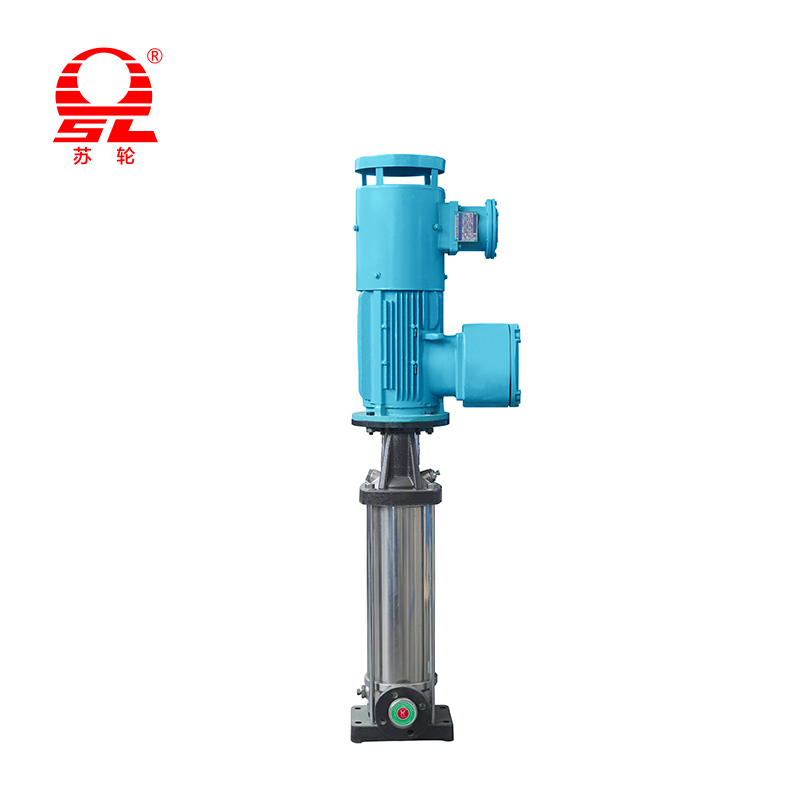
When the pressure generated by a single-stage pump is insufficient to push water to high elevations, a multi-stage pump is required. It connects multiple impellers in series within one pump body. Liquid passes through each impeller in sequence, and pressure increases at each stage. Commonly used for boiler feed water or high-rise building water supply.
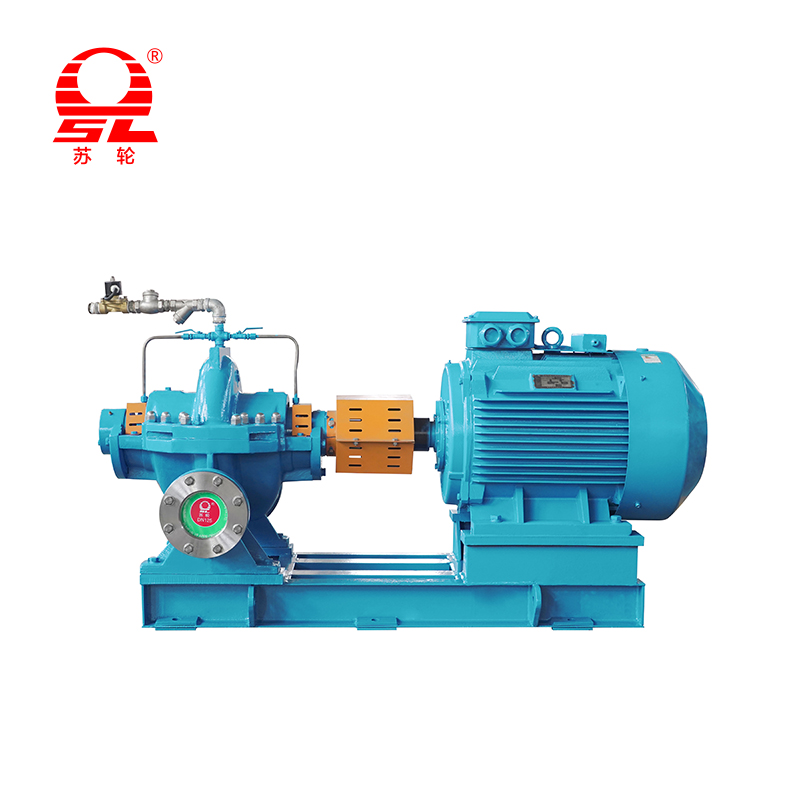
The casing of this pump can be opened along the horizontal centerline (axial split). Liquid enters both sides of the impeller simultaneously, which significantly increases the flow rate and offsets axial thrust, resulting in extremely smooth operation. It is the preferred choice for large water plants and industrial circulating water.
Ordinary centrifugal pumps must be filled with liquid before starting. Self-priming pumps, through a special pump chamber design, can automatically discharge air from the suction line during startup. They combine the high efficiency of a centrifugal pump with the air-evacuation capability of a positive displacement pump.
| Pump Type | Core Advantage | Typical Pressure Level | Maintenance Complexity |
| Single-Stage | Simple structure, low cost | Low - Medium | Very Low |
| Multi-Stage | Extremely high head | Extremely High | High (Complex) |
| Split-Case | Massive flow, stable | Medium | Medium (Easy access) |
| Self-Priming | No foot valve needed | Medium | Medium |
In pump room planning, choosing between "horizontal" or "vertical" is a primary question for engineers. The differences mainly lie in physical layout, performance, and installation costs.
This is the greatest advantage of the Horizontal Centrifugal Pump. Since the pump shaft is horizontal, the motor and pump body are usually installed side-by-side on a common base. Maintenance personnel can inspect the pump by opening the cover without dismantling the motor or the inlet/outlet pipelines. In contrast, vertical pumps usually require lifting equipment to pull the motor up vertically to access the impeller.
A vertical pump has a shaft perpendicular to the ground with the motor located above the pump body, resulting in a very small footprint—ideal for cramped machine rooms. Horizontal pumps require a longer installation platform.
Vertical pumps can have the pump head submerged (like deep well pumps) or lower the impeller height to obtain better suction head, thus avoiding cavitation. Horizontal pumps are more sensitive to suction height and generally require the water source not to be too low.
Horizontal pumps have a low center of gravity and low vibration, performing more robustly in high-power operations. Vertical pumps may experience swaying in high-head environments if the installation support is not sufficiently rigid.
| Feature | Horizontal Centrifugal Pump | Vertical Centrifugal Pump |
| Maintenance | Easy (external access) | Difficult (requires pulling motor) |
| Footprint | Large | Small / Compact |
| NPSHR | Standard | Generally Lower |
| Initial Cost | Lower | Higher |
When discussing the transport distance of a Horizontal Centrifugal Pump, a common misconception must be corrected: a pump's transport capability is not determined by a fixed "distance" parameter. What determines how far water can go is the balance between Head and Friction Loss.
The nameplate of a centrifugal pump usually marks the "Rated Head" in meters (m). If a pump has a head of 50 meters, it can push water vertically up 50 meters. In horizontal transport, since there is no direct gravity to fight, this 50 meters of pressure will be used entirely to overcome the friction of the pipe walls.
Pipe Diameter: This is the variable with the greatest impact on resistance. According to fluid dynamics, faster flow leads to higher resistance. Increasing the pipe diameter significantly reduces flow velocity, thereby exponentially increasing the horizontal distance.
Pipe Material: New plastic pipes (such as HDPE) have smoother surfaces and lower resistance than rusted cast iron pipes.
Flow Rate: If you try to squeeze more water through the same pipe, the pressure loss will rise exponentially.
Terrain Fluctuations: Even a slight upward slope will quickly consume the head of the Horizontal Centrifugal Pump.
| Pipe Size (DN) | Flow Rate (m3/h) | Horizontal Distance per 10m Head (Approx) | Notes |
| 50mm | 15 | ~120 meters | High resistance |
| 100mm | 60 | ~450 meters | Common industrial size |
| 200mm | 240 | ~1100 meters | Significantly lower resistance |
| 300mm | 500 | ~1800 meters | Suitable for municipal use |
Choosing the right horizontal centrifugal pump is not just about power; it is a precise calculation of efficiency and lifespan.
Every Horizontal Centrifugal Pump has a unique performance curve chart.
Flow-Head Curve (H-Q Curve): As flow increases, head decreases.
Best Efficiency Point (BEP): The closer the operating point is to the center of the curve, the lower the energy consumption and vibration.
NPSHr (Net Positive Suction Head Required): This is the key to the installation height of a horizontal pump.
Base Grouting: Horizontal pumps must be installed on a solid concrete base, with secondary grouting used to eliminate gaps.
Precision Alignment: The deviation between the motor shaft and the pump shaft centerlines must be controlled within 0.05mm.
Suction Pipe Design: The suction pipe should be as short and straight as possible, with a diameter usually one size larger than the pump inlet.
Answer: Mechanical seals and bearings usually rely on the transported liquid for cooling and lubrication. If the pump chamber is empty (dry running), the seal surfaces will generate extreme heat and crack within minutes.
Answer: Reduce Resistance by using larger diameter pipes or smoother materials. You can also use Frequency Conversion via a VFD or implement Series Boosting by adding a second Horizontal Centrifugal Pump midway through the pipeline.
Answer: Centrifugal pump impellers cannot effectively compress air. If the casing is full of air, the centrifugal force generated is too small to create sufficient negative pressure at the suction port to pull water in.
Answer: When a pump stops or a valve closes suddenly, the inertia of water in long pipes creates a massive pressure shock. Prevention includes installing slow-closing check valves or using VFDs for soft stops.
Answer: In heavy industrial environments, the Horizontal Centrifugal Pump is generally more mechanically stable than a vertical pump due to its balanced center of gravity and even bearing loads.
Cavitation is a physical phenomenon. When the inlet pressure is too low, the liquid instantly vaporizes into tiny bubbles. As these bubbles enter high-pressure zones, they collapse violently. This creates micro-explosions strong enough to pit metal surfaces and cause loud popping noises.

+86-0523- 84351 090 /+86-180 0142 8659


Add 1: Hongguang Industrial Park, Jingjiang City, Jiangsu Province, China
Add 2: No.68, Xinyi Road, Industrial Park, Jingjiang City, Jiangsu Province, China
+86-0523- 84351 090
+86-180 0142 8659
+0523-8435 5588